Buying Tips
True Fit vs Fit Analytics vs Kiwi Sizing vs Sizely (2026)
We compared True Fit, Fit Analytics, Kiwi Sizing, and Sizely on price, platforms, and published accuracy, using dated primary sources only.
Jason
August 10, 2026

Wardrobing, bracketing, and serial returners get lumped together, but the fix for each is different. Here is what each one is and what to do about it.
Written by
Jason
Published on
July 11, 2026
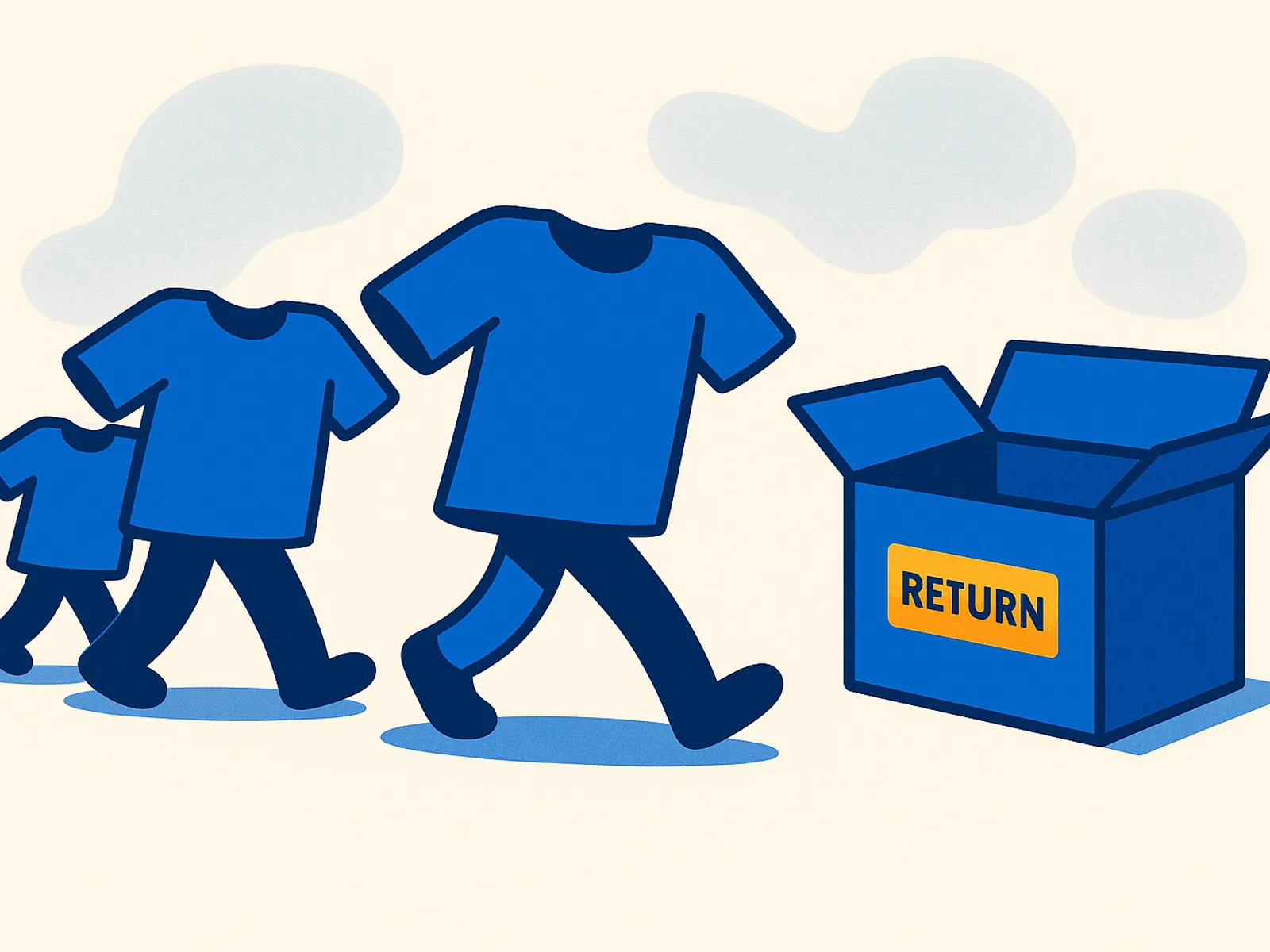
Wardrobing is return fraud, bracketing is honest shopping, and a serial returner is a customer relationship that has gone underwater. All three land in your returns column, so they get treated as one problem, and the fix for each is completely different. Treat a careful bracketer like a thief and you lose a good customer: 58% of US shoppers say they order multiple sizes on purpose (Narvar, "The State of Returns," 2021).
The three behaviors, defined
These three get lumped together every time a clothing store talks about returns, and they are not the same thing. One is fraud. One is rational shopping. One is a customer relationship that has gone underwater. Sorting them apart matters, because the fix for each is different, and treating a careful bracketer like a thief is a fast way to lose good customers.
Wardrobing is the fraud end of the returns spectrum. Someone buys a dress for a wedding, wears it to the wedding, tucks the tags out of sight for the photos, and ships it back on Monday for a full refund. The store paid for shipping both ways, cannot resell the item at full price, and funded a free rental it never agreed to.
Nobody can tell you exactly how common it is, and you should be suspicious of anyone who quotes a precise figure. Most numbers you will see fold wardrobing in with other return abuse (empty-box returns, worn-and-returned goods, receipt fraud), so they measure the whole category of abuse, not wardrobing on its own. What retailers do agree on is the classification: wardrobing is returns fraud, not a policy quirk to absorb.
What actually reduces it:
Bracketing is the opposite of fraud. A shopper orders the same jacket in a medium and a large, keeps the one that fits, and returns the other. It shows up as returns in your numbers, but the intent is honest: the buyer wants the item, they just cannot tell which size is theirs from the label alone.
It is also common. In a 2021 Narvar survey of US shoppers, 58% said they bracket their online orders (Narvar, "The State of Returns," 2021). When a size label is a coin flip, ordering two sizes is the rational move, and the shopper is doing your fit-check for you at their own inconvenience.
That reframes bracketing as a symptom, not a crime. The behavior tells you your product page never answered the question "will this fit me?" before checkout. Close that gap and the second box stops leaving the warehouse:
A serial returner is a customer whose return rate stays high across many orders. Some are wardrobers. Some are heavy bracketers. Many are simply uncertain shoppers who never found a store that sizes consistently. The label describes a pattern, not a motive, which is exactly why it is tricky to act on.
Be honest about the data here: there is no neutral, agreed industry figure for how many shoppers count as serial returners. The threshold is yours to set, because it depends on your margins, your category, and your average order value. A boutique with thin margins and a high-volume marketplace reseller will draw the line in very different places.
What to do:
The quick way to keep them straight:
| Behavior | Intent | Where It Sits | What Fixes It |
|---|---|---|---|
| Wardrobing | Get a free rental | Fraud | Tags, wear checks, store credit |
| Bracketing | Buy the right size | Normal, honest shopping | Better sizing info up front |
| Serial returning | Varies by person | A pattern to measure, not a verdict | Per-customer data plus policy tiers |
The trap is applying a wardrobing fix to a bracketing problem. Tighten your policy on every return and you punish the honest shopper who ordered two sizes because your chart was vague, while the actual fraudster shrugs and moves to the next store. Fix the sizing first, then police the fraud that is left.
For the full playbook, see how to reduce clothing returns.
Wardrobing is buying an item, using it once, and returning it for a full refund, for example wearing a dress to an event with the tags hidden and sending it back afterward. Retailers classify it as returns fraud rather than normal return behavior.
Bracketing raises your return rate, but the intent is honest: the shopper wants the item and cannot tell their size from the label. Treat it as a signal that your sizing information is weak, not as abuse. Better size charts and on-page size recommendations cut it at the source.
In a 2021 Narvar survey of US shoppers, 58% said they bracket their online orders (Narvar, "The State of Returns," 2021). It is one of the most common return behaviors in apparel, which is why fixing sizing pays off across a large share of your orders.
Yes. Most retailers can set return terms per account and decline to offer free returns, or future orders, to customers whose return rate makes them unprofitable. Base the decision on per-customer return data and apply a consistent threshold rather than acting case by case. Refund and consumer-protection rules vary by country, so check your local requirements before you change policy.
Bracketing falls when a shopper can settle their size before checkout, so it pays to know what the tools do. Our review covers which size recommendation app suits a store your size.
Written by
More from the blog
Guides on how to measure yourself, read a brand's size chart, and convert sizes between brands and countries, so you order the right size the first time.
We compared True Fit, Fit Analytics, Kiwi Sizing, and Sizely on price, platforms, and published accuracy, using dated primary sources only.
Jason
August 10, 2026
Theme section, a size chart app, or a free chart image from Sizely. Three ways to add a size chart to Shopify, and what each one takes and costs.
Jason
July 11, 2026
Every big ecommerce returns stat in one place, traced to its primary source: 2025 return rates, why clothing comes back, and what cuts returns.
Jason
July 11, 2026