Buying Tips
True Fit vs Fit Analytics vs Kiwi Sizing vs Sizely (2026)
We compared True Fit, Fit Analytics, Kiwi Sizing, and Sizely on price, platforms, and published accuracy, using dated primary sources only.
Jason
August 10, 2026

Returns eat margin and time, and most of them are sizing. Nine practical ways to cut clothing returns, with the data behind each and where to start this week.
Written by
Jason
Published on
July 11, 2026
Quick answer
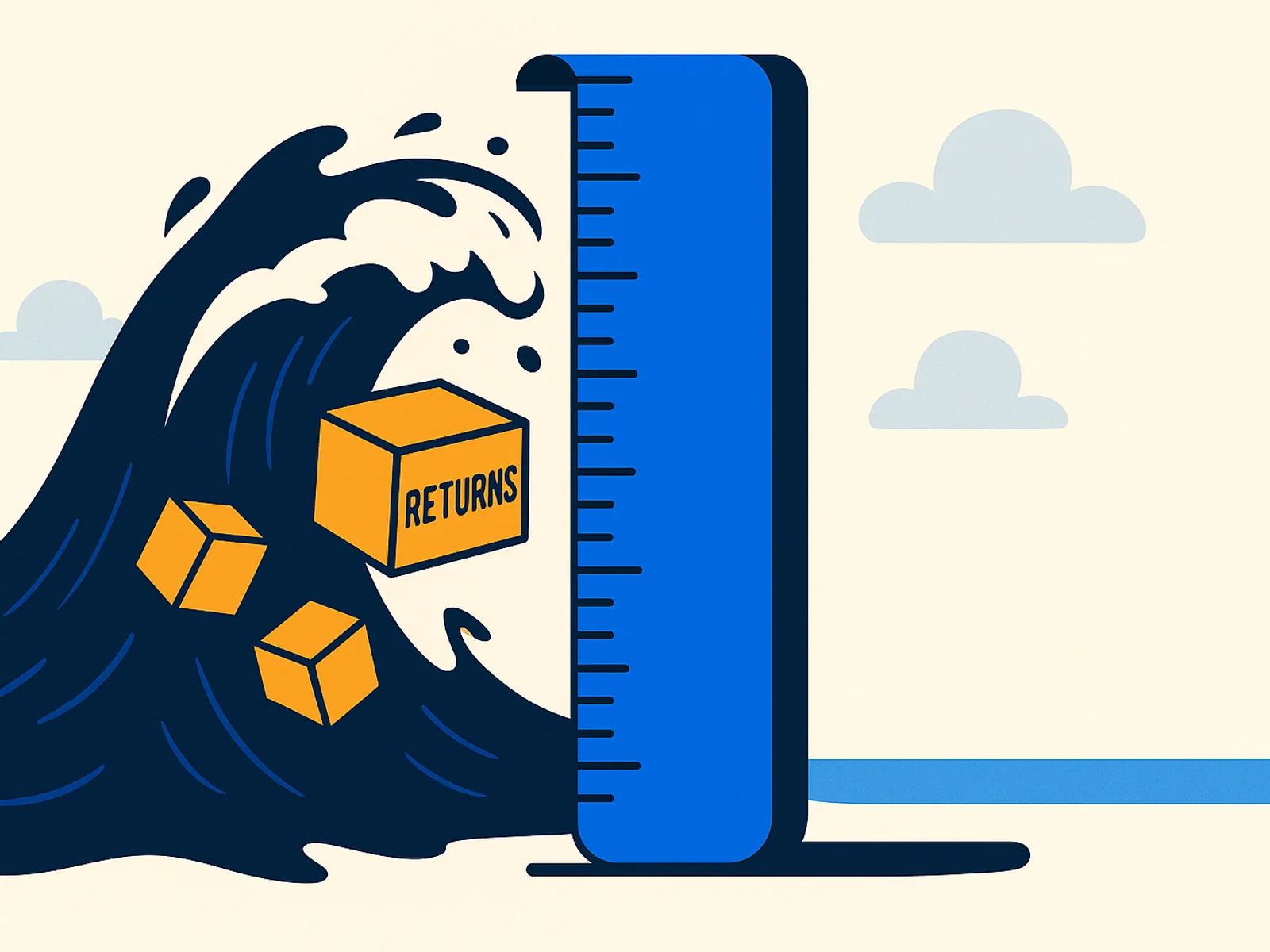
Most clothing returns are sizing problems, so the fastest way to reduce them is to tell shoppers what will fit before they buy. Coresight Research tied 53% of apparel returns to size and fit in 2023. The nine tactics below work in rough order of effort and payoff, starting with real measurements on every listing and a size recommender on the product page, and ending with the returns data you should be reading each month.
Returns are the quiet tax on a clothing store. You paid to get the customer, paid to ship the order, and now you're paying to take it back and often resell it at a markdown. Most of the time the reason is dull: the garment didn't fit. Coresight Research pinned size and fit as the cause of 53% of apparel returns in 2023. That's oddly good news, because sizing is the one return reason you can fix before the box ever leaves your warehouse. For the wider picture on what returns cost and why, see our roundup of ecommerce return statistics.
A size chart that just repeats S, M, L next to a brand name tells a shopper almost nothing. What they want is a number to check against a garment they already own: chest or bust, waist, length, sleeve, and shoulder, in both inches and centimeters. A chart built on real measurements attacks the biggest return cause. It won't stop the shopper who orders two sizes on purpose, but it clears out the honest mistakes.
Start this week: measure your ten best sellers flat and put the numbers on each listing. You can build a branded chart image in about a minute with the Sizely size chart maker, then paste it in with no code.
A chart asks the shopper to measure themselves. A size recommender does the math for them: the shopper answers a few quick questions, height, weight, how they like things to fit, and the tool returns a single size on the product page, sized against your charts, not a generic average. The advantage is coverage: most shoppers won't dig out a tape measure, but almost everyone answers three questions. Sizely's engine gets the exact size right 98.1% of the time and lands within one size 99.8% of the time, measured rather than estimated.
Start this week: if you run your own store on Shopify or Woo, add Sizely Fit Finder to your product pages. Comparing tools first? We put the honest numbers side by side in our comparison of size recommendation apps.
Most descriptions lead with mood, something like "relaxed weekend staple," which sells a vibe and hides the fit. Flip the order and open with the numbers: pit-to-pit width, the length from shoulder to hem, the inseam on bottoms, and whether the piece runs small, true, or large. A line like "model is 5 foot 9, or 175 cm, and wears a medium" beats a paragraph of adjectives, and it doubles as SEO, because "measurements" and "fit" are what buyers search.
Start this week: write a three-line fit block, put it at the top of every new listing, and backfill your top sellers.
A flat lay tells the shopper what the garment is, not how it sits on a body, and "it looked different on me" is a real return reason that has nothing to do with the size chart. Photos on a person, or on a ghost mannequin, show the drape, the rise, and where the hem lands. You don't need a studio for every SKU: Sizely's Seller Studio can turn a flat product shot into on-model photos, so even a one-person shop can show fit without a shoot.
Start this week: reshoot or regenerate the hero image on your five highest-return items so the garment appears on a body.
Your reviews already hold the answer to "does this run small?" The trouble is it's buried in prose nobody reads before checkout. Surface it: ask every reviewer one question, "how did it fit," with three options, runs small, true to size, runs large, then show the tally on the page. "Most buyers say this runs small, consider sizing up" is one of the most persuasive lines next to a size chart, because it's other shoppers talking and not you. There's no clean industry number for how much fit reviews cut returns on their own, but they answer the exact question that drives sizing returns.
Start this week: add a fit question to your review-request email, and switch on fit polls if your review app has them.
Bracketing is when a shopper buys the same item in two or three sizes, keeps one, and sends the rest back. It's normal behavior now: Narvar found 58% of shoppers have done it (2021). Those returns were planned before checkout, so the size-chart tactics above won't touch them. You can still shape it: spot bracketing by looking for orders with the same style in multiple sizes, then pick a response, a confident size recommender, tighter return terms on flagged items, or treating it as a cost of business on your bestsellers.
Start this week: filter last month's orders for multi-size purchases of a single style. That count is your bracketing baseline.
Your policy is a set of incentives, whether you meant it that way or not. Blanket free returns are easy to advertise, and they quietly pay shoppers to bracket. A harsh no-returns policy protects your margin and scares off first-time buyers who can't tell if a piece will fit. The useful ground sits in between: free exchanges but paid returns, so a wrong size gets swapped instead of refunded and reordered elsewhere, or full-value store credit against a small fee for cash back. There's no universal winner here, it turns on your margins and your buyer, so change one thing at a time and watch the rate.
Start this week: switch your default return path to an exchange or store credit, with a straight refund one click further down.
There's a quiet window between "order placed" and "order shipped" where a return can still be headed off. A short email that restates the size, the key measurements, and a one-tap "need a different size?" link lets a second-guessing shopper fix it before you pack the box. It pays off most for made-to-order and slower stores, where the shipping gap is wide. We can't hand you a figure for this one, it's under-studied, but the logic holds: an exchange before shipping costs far less than a return after.
Start this week: add the ordered size and its measurements to your order-confirmation email, with a clear reply-to-change instruction.
You can't reduce what you don't measure, and most stores know their overall return rate and nothing beneath it, which is like knowing total sales but not which products sold. Tag every return with a reason, too small, too large, not as pictured, changed mind, and pull the report monthly by SKU. Two or three items usually drive most of your fit returns, and those get fixed first, with better measurements, a reshoot, or a "runs small" flag. A product returned for size far above your average is telling you its chart is wrong.
Start this week: turn on return reason codes at checkout, then sort next month's returns by SKU and reason. Fix the top three.
Nine tactics is a lot when you pack orders yourself. Start where the payoff is highest for your volume.
Under 500 orders a month, do one thing well: put a real-measurement size chart on every listing with the size chart maker, and add a three-line fit block to your descriptions. That handles most of the sizing-return problem in an afternoon, with no monthly cost.
Between 500 and 5,000 orders a month, the manual approach stops scaling. Add a size recommender so shoppers self-serve, turn on return reason codes, and read the monthly per-SKU report. This is where Sizely Fit Finder pays for itself, because a single point of returns is now real money.
Above 5,000 orders a month, you're optimizing rather than fixing. Layer in fit reviews, post-purchase confirmation, and a returns policy tuned to your bracketing data, and let the analytics tell you which earlier tactic to push hardest.
Size and fit. Coresight Research tied 53% of apparel returns to size and fit in 2023, ahead of every other reason. It's also the most fixable, because you can give shoppers real measurements and a size recommendation before they buy.
A size chart built on real flat measurements helps, because it lets a shopper compare against a garment they already own instead of trusting a letter on a tag. It won't stop planned bracketing returns, but it removes the honest sizing mistakes that make up a large share of the total.
It depends on your current return rate, your categories, and how much of your returns are sizing versus planned bracketing. Anyone promising a fixed percentage before seeing your data is guessing. Fix the sizing causes you control, tag returns by reason, and measure against your own baseline.
Bracketing is buying one item in several sizes to keep the best fit and return the rest. Narvar found 58% of shoppers have done it (2021). You can't fully stop it, but a confident size recommender and a returns policy that favors exchanges over easy refunds both bring it down.
Free returns lift conversion, and they also pay shoppers to bracket. A middle path works for most stores: free exchanges, paid or store-credit refunds, and a straight refund available but not the default. Test one change and watch your return rate before rolling it out.
Ready to cut the sizing returns you can control? Make a free size chart with the Sizely size chart maker, or add Fit Finder to your product pages so shoppers get their size before checkout.
Written by
More from the blog
Guides on how to measure yourself, read a brand's size chart, and convert sizes between brands and countries, so you order the right size the first time.
We compared True Fit, Fit Analytics, Kiwi Sizing, and Sizely on price, platforms, and published accuracy, using dated primary sources only.
Jason
August 10, 2026
Theme section, a size chart app, or a free chart image from Sizely. Three ways to add a size chart to Shopify, and what each one takes and costs.
Jason
July 11, 2026
Every big ecommerce returns stat in one place, traced to its primary source: 2025 return rates, why clothing comes back, and what cuts returns.
Jason
July 11, 2026