Buying Tips
How to Add a Size Chart to Shopify (3 Ways)
Theme section, a size chart app, or a free chart image from Sizely. Three ways to add a size chart to Shopify, and what each one takes and costs.
Jason
July 11, 2026

We compared True Fit, Fit Analytics, Kiwi Sizing, and Sizely on price, platforms, and published accuracy, using dated primary sources only.
Written by
Jason
Published on
August 10, 2026
For most stores below enterprise size, the size recommender choice comes down to public pricing: Kiwi Sizing from $14.99 a month if you are Shopify-only, or Sizely from $39 a month with a published accuracy number on any platform, while True Fit (reported floor near $1,000 a month, TrustRadius) and Fit Analytics (quote-only) serve enterprise brands. Every price on this page was checked against a primary source in August 2026, and every widget was captured live so you can see exactly what your shoppers would get.
Short answer
Every size recommender promises fewer returns and better fit. Getting a straight answer on what they cost, which platforms they run on, and how well they actually work is harder than it should be. Two of the four biggest names will not show you a price without a sales call. So we pulled the numbers that are public, dated them, opened each widget on a live store, and set the screenshots next to ours.
We only used facts we could check against a primary source: the vendor's own pricing page, its Shopify App Store listing, or a named third party like TrustRadius. Where a figure came from somewhere other than the vendor, the row says so. Every price here was checked in August 2026, and every competitor screenshot was captured in August 2026 from a live store, credited under the image. Pricing in this niche moves. Kiwi Sizing's plans went up between our July and August checks, which is exactly why the dates matter. Treat the dated cells as a snapshot and click through before you commit.
We left cells blank instead of guessing. If a vendor does not publish its accuracy or its price, that gap is the finding. Our own numbers sit in the same table under the same rule: 98.1% exact and 99.8% within one size, measured with a Size Chart connected, and where our own tool has no measured number, the instant universal mode, we say that too. If we ask you to trust a claim, we show where it comes from.
One flat table hid something: chart pricing and recommender pricing are different purchases. A size chart is the cheap entry point everywhere it exists, the recommender is where enterprise pricing starts. So the comparison comes in four parts: size charts, the apparel recommender, the shoe recommender, and the fine print. A check means we verified the vendor offers it, a cross means it does not, and where a vendor publishes nothing we write that instead of guessing.
 True Fit True Fit |  Fit Analytics Fit Analytics |  Kiwi Sizing Kiwi Sizing |  Sizely Sizely | |
|---|---|---|---|---|
| Chart builder | Not offered | Not offered | Yes | Yes, free to build |
| Interactive chart embed on your store | No | No | On Shopify stores | On any platform, one line of code |
| Image chart for marketplace listings | No | No | No | Item Chart, free to download |
| Price to start | Not offered | Not offered | Free to start (3 charts, Kiwi watermark), $7.99/mo without it | Free to start. Watermark off from $14/mo on Pro (annual basis, $17 monthly) |
| True Fit | Fit Analytics | Kiwi Sizing | Sizely | |
|---|---|---|---|---|
| Offered | Yes | Yes | Adult apparel only | Yes, across 300+ garment designs |
| What shoppers enter | Height, weight, age, plus a brand and size they wear | Size and fit questions | Age, height, and weight, or a body measurement on its simpler types | Height, weight, a few taps. A real measurement sharpens it |
| How it recommends | Purchase-history network plus a short profile | Machine learning on quiz answers and order data | Body estimate from the quiz | Scored against your chart's real measurements |
| Shopper registration | About 30 seconds, once | Not published | None | None |
| Price to start | Reported floor near $1,000/mo (TrustRadius) | By quote | $14.99/mo on Plus | $39/mo on Store (annual basis, $47 monthly) |
| True Fit | Fit Analytics | Kiwi Sizing | Sizely | |
|---|---|---|---|---|
| Offered | Yes | Footwear covered | No brand-to-brand shoe tool | Yes |
| From a pair they already own | Via its closet profile | Not published | No | Yes, across 450+ brands |
| From foot length | Not published | Not published | Only via a self-built custom recommender | Yes, in inches or centimeters |
| Size systems | Not published | Not published | Not applicable | US, UK, EU, and JP, where the brand publishes them |
| Price to start | Included in the platform quote | By quote | Not applicable | Included with Apparel, one shared pool from $39/mo |
| True Fit | Fit Analytics | Kiwi Sizing | Sizely | |
|---|---|---|---|---|
| Published accuracy | Not published | Outcome averages only | Not published | 98.1% exact, 99.8% within one size with a Size Chart connected (measured) |
| Platforms | Shopify app plus enterprise integrations | Script install with their team | Shopify only | Any platform, one snippet, plus marketplace image charts |
| Price at scale | By quote | By quote | Up to $364.99/mo on Plus or $726.99/mo on Ultimate past 20,000 orders, plan plus surcharge | $149/mo on Brand, a public ladder to 33,000 opens a month |
| Reviews | 4.4 from 18 (Shopify App Store) | No app store listing | 4.8 from 1,094 (Shopify App Store) | 4.9 from 350+ public reviews |
| Try it before a sales talk | Install the Shopify app | No public demo found (August 2026) | Its demo store | The live demo store, no account |
| How you start | Contact sales, or the Shopify app | Contact form | Shopify App Store install | Sign up free |
True Fit is the biggest name in fit tech, and its model is different from everyone else's: recommendations come from a purchase-history network, which the company says is built on more than 80 million shoppers and close to twenty years of purchase and return outcomes (their figures). The strength is real. With that much cross-brand data, True Fit can size a shopper who has never visited your store before, across both apparel and footwear.
Here is what your shopper actually sees. A "find my size" link sits near the size selector. Clicking it opens a short registration, about 30 seconds: height, weight, age, then a favorite brand and size from their closet, like a Levi's 32x32. After that first pass, returning shoppers get an instant recommendation on every True Fit store without answering anything again.
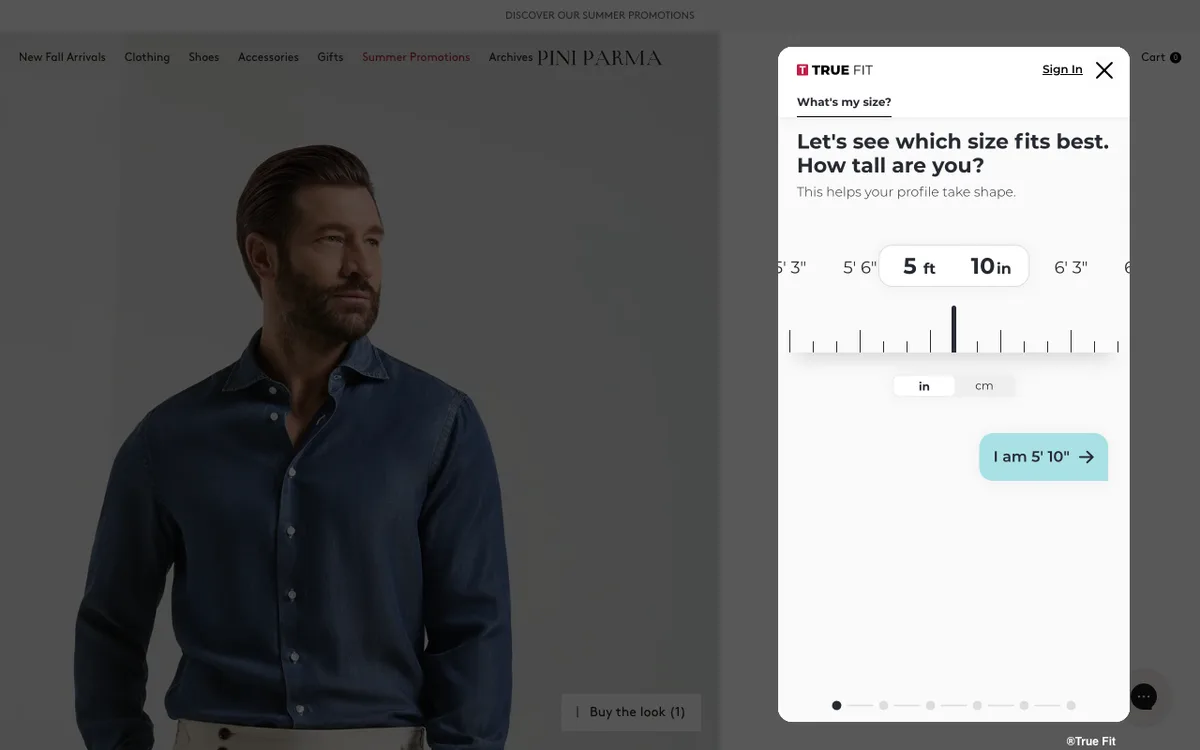
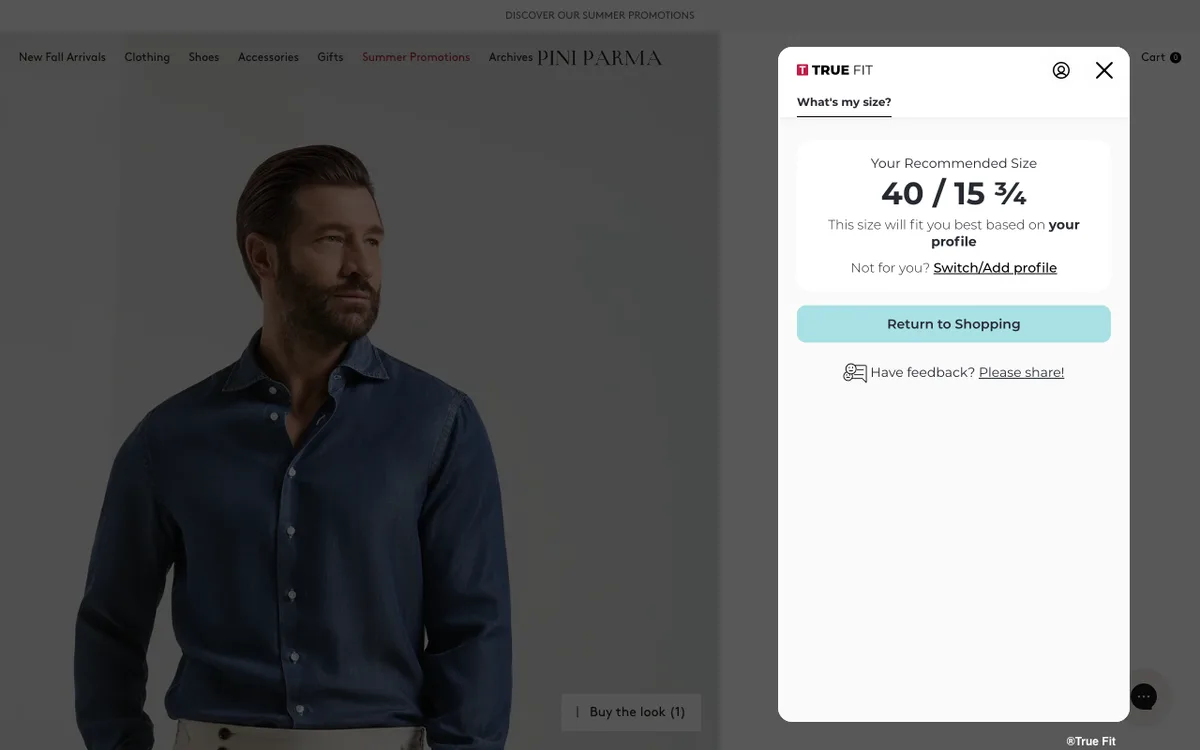
Pricing is handled by a sales team, not a public page. The one dated figure we could verify is a reported floor near $1,000 per month on TrustRadius, based on annual order volume (checked August 2026). There is also a self-serve path: a Shopify app, live since July 2023, free to install, rated 4.4 from 18 reviews as of August 2026. True Fit says it is the first fit and sizing app certified in the Shopify Plus Certified App Program. So "enterprise only" would be unfair. "Enterprise priced" is accurate.
No accuracy figure is published. The verdict: if you run a brand with a deep catalog and the volume to feed a network model, True Fit belongs on your shortlist, and we say so again at the end of this article. At a reported floor near $1,000 a month, the math rarely pencils out for a small shop or a one-person reselling operation.
Fit Analytics is the other enterprise pick, and the one with the longest arc. Founded in Berlin (as UPcload, renamed Fit Analytics in 2014), it signed The North Face as its first major partner back in 2012. Snap bought the company in 2021 for about $124 million (TechCrunch, from Snap's filing), then in January 2024 the pre-acquisition IP was sold back and the company re-established itself as an independent business, Fit Analytics Innovation GmbH. Today its homepage counts 250+ global partners. And yes, its product is literally named Fit Finder. The term has become the category word, which says something about how long they have been at this.
For the shopper, Fit Finder is a "find my size" entry near the size row that opens a short flow of size and fit questions (their phrasing): the familiar height, weight, and age set plus fit preference, ending in a size recommendation on the product page.
We went looking for a live Fit Finder to screenshot in August 2026 on four stores named in their own materials (Mammut, Puma, Uniqlo, Alpha Industries) and did not find the widget running on any of them. Uniqlo US now loads a different vendor's sizing tool. There is no public demo store and no app listing either, so this is the one tool in this comparison you cannot try before a sales conversation.
Fit Analytics publishes average partner outcomes rather than an accuracy rate: a 4 to 6% average conversion lift and a 2 to 4% average reduction in return rate (their fit-finder page, checked August 2026). Those are vendor-reported averages, not third-party audits, but publishing them at all is more than most of this market does. Integration is a script pair, one on the product page and one on the order confirmation page, installed with their team. There is no app store listing and no self-serve path.
The verdict: a mature, longevity-proven tool for enterprise retailers that want white-glove integration and can procure by quote. For everyone smaller, the quote wall is the obstacle, which brings us to the question people actually search for.
There is no public Fit Analytics price. We checked again in August 2026: the pricing model is quote-only, the site's calls to action are a contact form and "Let's Talk", and because there is no app store listing there is no listed app fee either. Any dollar figure you see attached to Fit Analytics elsewhere on the web is a guess, so we will not print one.
What we can tell you about the process: you start at their contact form, scope the integration with their team, and the quote depends on your catalog and your traffic. For budget context in this lane, the closest comparable vendor with a verifiable number is True Fit, whose reported floor is near $1,000 per month (TrustRadius). That figure is True Fit's, not Fit Analytics', and we cite it only to show where enterprise fit tooling tends to start.
If you request a quote, ask three things in writing: the number itself, how it changes at your order volume, and what happens to the price if your traffic doubles. Then hold the answers next to the public-priced options in the table above. That comparison is the entire reason this page exists.
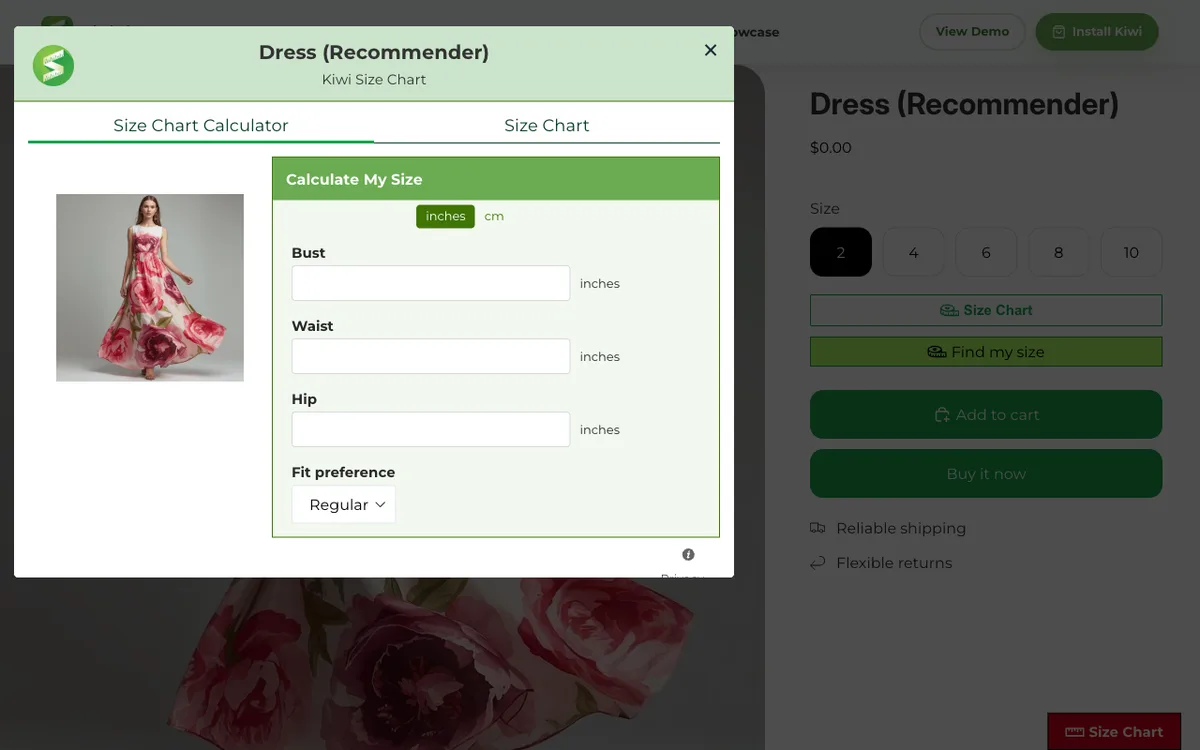
Kiwi Sizing is the popular Shopify pick, and by install-base feedback the best-liked app in this comparison: 4.8 stars from 1,094 reviews on the Shopify App Store as of August 2026. It bundles a size chart builder with three recommender types. The flagship Advanced Apparel type asks age, height, and weight, estimates body measurements from them, and suggests a size, for adult apparel only, men and women. Its simpler types ask for a body measurement instead, which is the flow pictured below on Kiwi's own demo store. Either way, the shopper meets a trigger near the size selector.
Now the part that surprises people: the bill. The recommender is not on the free tier. You need at least the Plus plan at $14.99 per month, which caps you at 10 recommenders. Unlimited recommenders means Ultimate at $26.99 per month. Note those numbers are higher than they were: when we first checked in July 2026, Plus was $12.49 and Ultimate was $24.49. Kiwi raised prices between our checks.
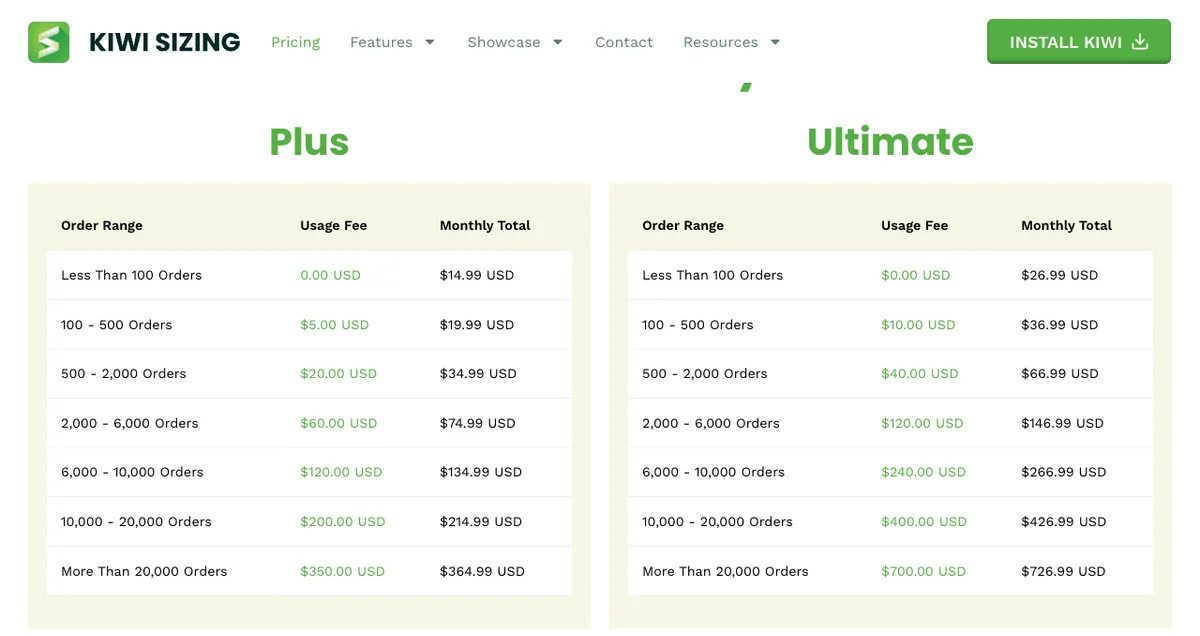
Then the surcharges. As your monthly orders climb, Kiwi adds an order-volume fee on top of the plan: from $5 a month at 100 to 500 orders, to $60 on Plus (or $120 on Ultimate) at 2,000 to 6,000 orders, up to an extra $350 on Plus or $700 on Ultimate once you pass 20,000 orders a month (all checked August 2026 on their pricing page).
A recurring note from Shopify App Store reviewers is surprise at that growth curve. One August 2026 review describes going from about $5 to $7 a month to about $150 a month through order-based plan bumps. The price you sign up at is not the price you pay once the store grows.
Three more things worth knowing. Kiwi is Shopify only as of August 2026, its WordPress plugin closed in December 2021, so it is off the table if you sell anywhere else. It publishes no accuracy figure. And there is no brand-to-brand shoe tool: its generic custom recommender can be pointed at footwear, but nothing converts a shopper from a pair they already own.
The verdict: for a Shopify store that wants a well-reviewed recommender live this week and accepts usage-based billing, Kiwi does the job. Read the surcharge table before you install, so the month-six invoice does not catch you off guard.
The size and fit space has more than four names in it. Here is what we could verify about the ones you are most likely to meet, each checked against its own site in August 2026.
None of that is a knock on any of them, it is the same standard we hold ourselves to. If you evaluate one seriously, ask for current pricing and the accuracy methodology in writing, then hold the answers next to the dated numbers above.
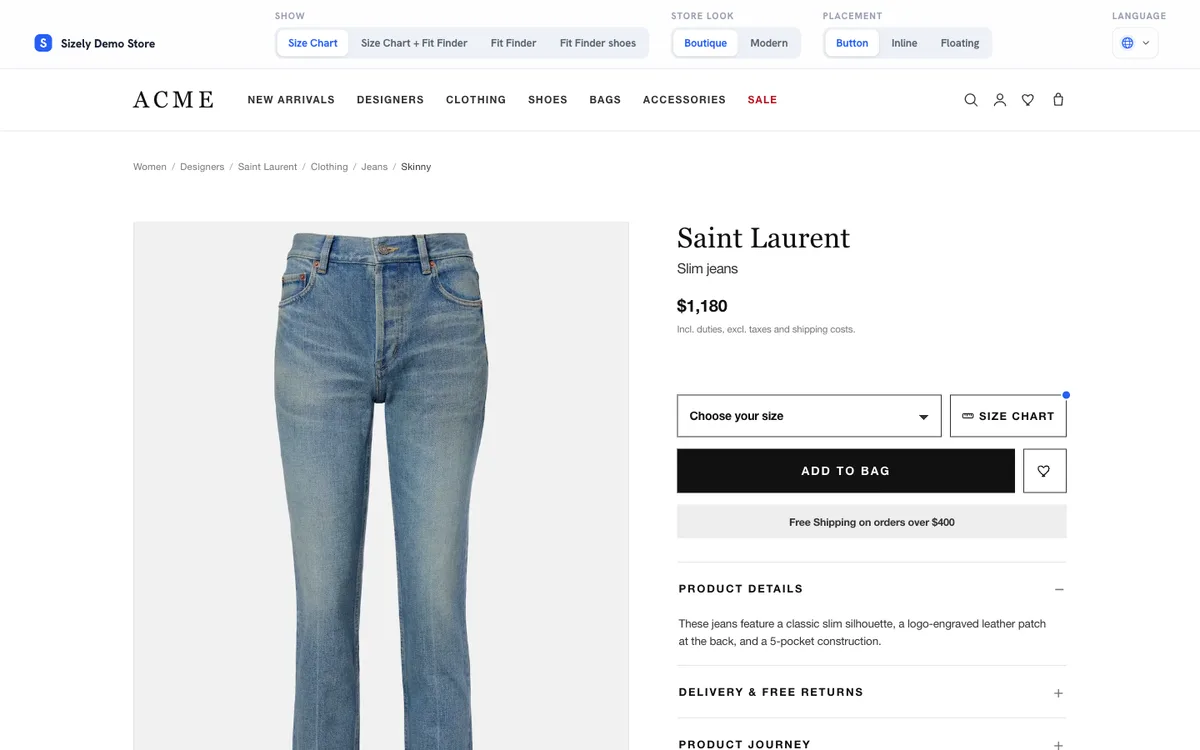
Sizely is the measurement platform behind 85,000+ sellers, and our answer to the size question starts from a different place than the network models: the garment's own measurements. A chart built from real measurements is the ground truth a recommendation can be scored against, which is why our accuracy is a measured number and not a marketing estimate. Below is each of our tools reviewed the way we reviewed the others, screenshots included. Every one of them is clickable right now in the live demo store, no account needed, and the family overview lives on the size recommender page.
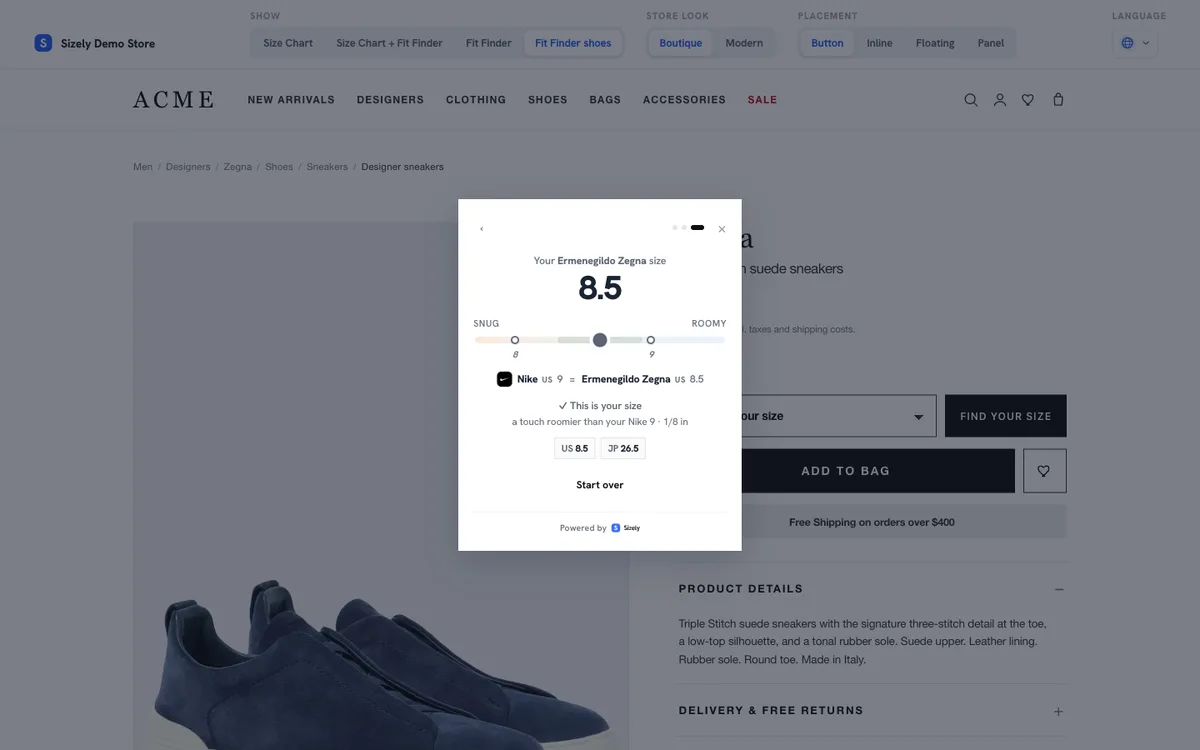
The shoe question is really a conversion question: "I'm a 9 in Nike, what am I here?" So that is the input. A shopper names a pair they already own, or gives a foot length in inches or centimeters, and the widget answers with their size in your brand plus a calibrated confidence read: great fit, good fit, or between sizes, with the room in millimeters. Not a flat yes or no.
It runs on verified sizing data across 450+ brands, matched by foot length, and only brands we have verified are offered as answers. Shoe accuracy is measured on a different basis than apparel (cross-brand mapping rather than body-to-garment scoring), so rather than print a bare number here we publish the figure with its method on the shoe size recommender page, where you can also try the same brand-to-brand conversion yourself.
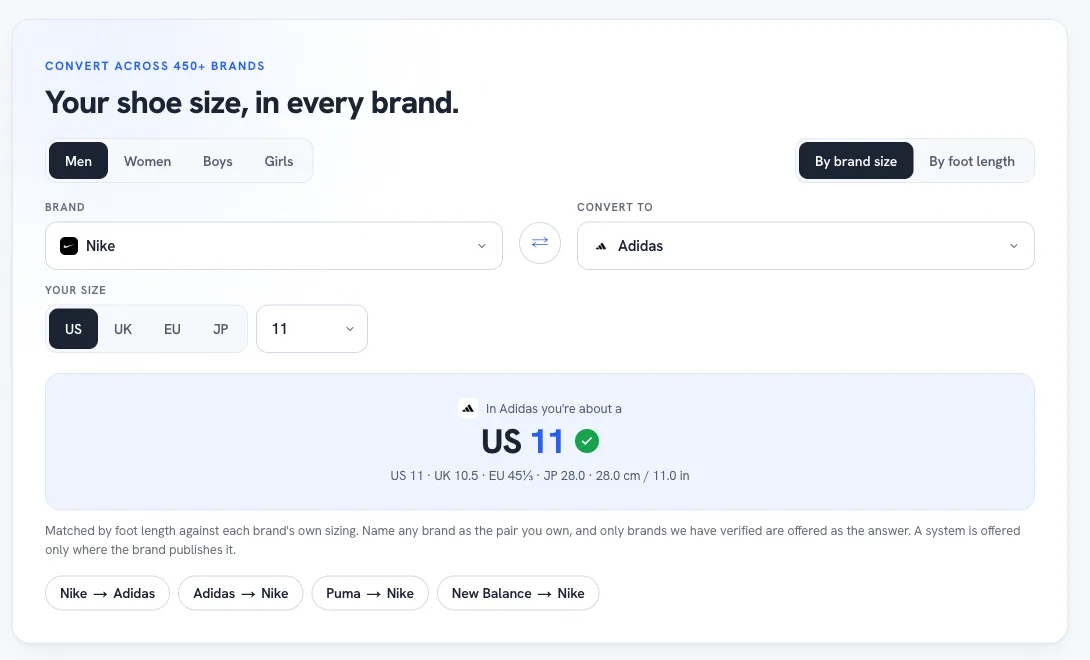
One script tag works on any platform, Shopify to fully custom. Best for: any store selling footwear that wants the lowest-friction answer a shoe shopper can get.
For apparel, the widget asks two numbers and a few taps: height, weight, then quick fit questions. No shopper account, nothing to remember, and it ships in English plus 12 more languages. A shopper who adds a real measurement gets a sharper answer, and the whole flow ends in a size with a confidence read, right on the product page.
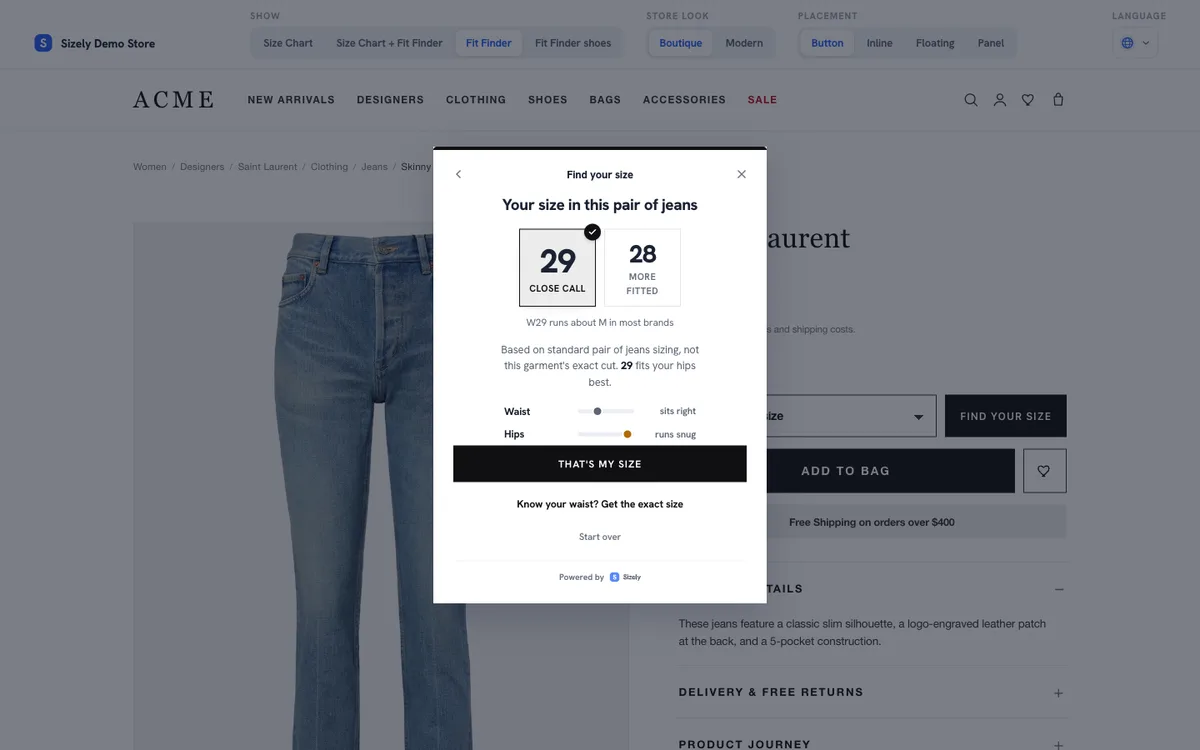
It runs in two modes, and we hold them to the honesty rule from the table. Universal mode works instantly with no chart connected, sized from a body model built on public anthropometric data. It gives standard sizing, not the exact cut of your garment, and we publish no accuracy figure for it. Connect your Size Chart and the recommendation is scored against the exact measurements you publish: that mode measures 98.1% exact and 99.8% within one size. Because the score comes from your chart rather than purchase history, it works from day one, with no order data to accumulate first.
Placement is your call: an inline link by the size selector, a pop-up button, a docked panel, or the Find my size tab inside your Size Chart. Best for: any store that publishes real measurements and wants an accuracy number it can quote to its own customers.
Everything above stands on this. The interactive Size Chart embed is one line of code that puts an on-brand trigger next to your size selector: a text link, icon, or button, inline or pinned. A shopper taps it and the live chart opens over the page with an inch and centimeter toggle, a size selector, and a find-my-size lookup, styled to your store's colors, corners, and font.
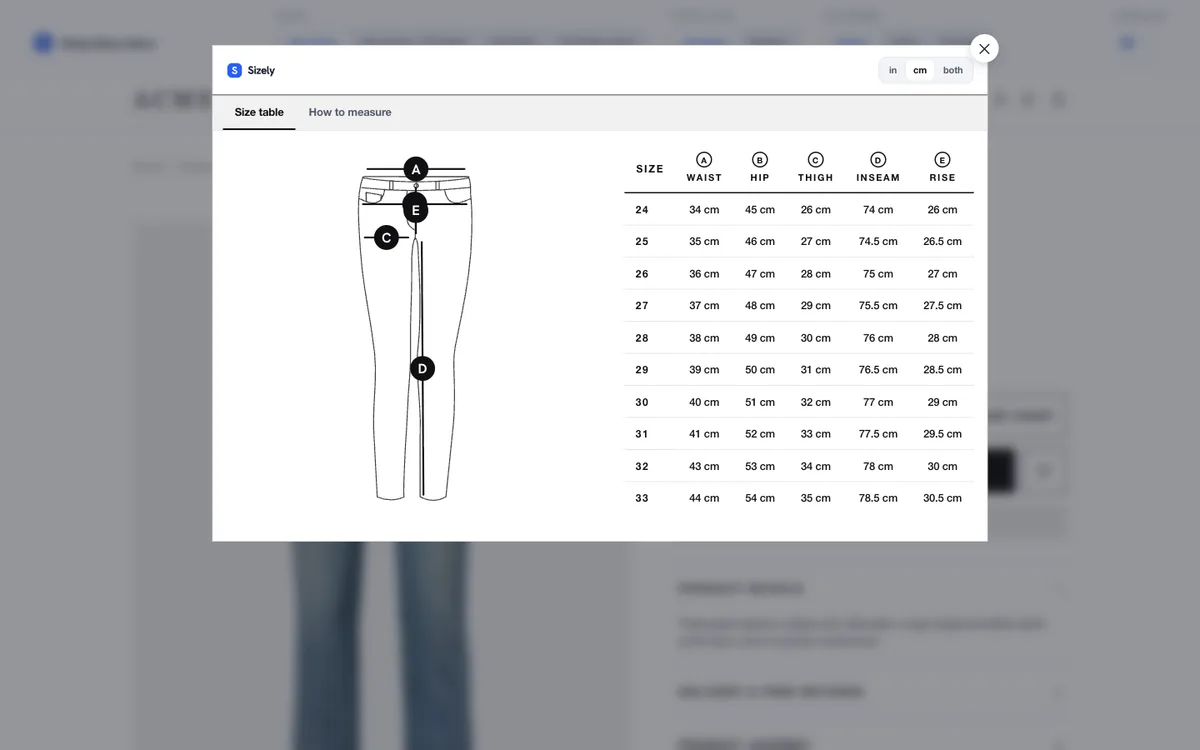
Selling on marketplaces too? That is a different product on purpose. eBay and Poshmark listings do not run scripts, so for those you make an Item Chart, a measured image you paste straight into the listing, free in about a minute with the size chart maker. The interactive embed is for your own store, the image chart is for your listings, and we never pretend one is the other.
Every plan includes the interactive embed, capped by chart count: Free publishes 1 live Size Chart a month, Pro takes it to 5 at $14 a month (annual basis, $17 monthly), Store 50, Brand unlimited. Best for: everyone, it is the foundation the Fit Finder plugs into.
Prices only mean something against real volume, so here are three stores. Every figure was checked in August 2026 and covers the size tooling only. Sizely prices are the annual plan (Store $39 is $47 billed monthly, Brand $149 is $179).
A small store doing about 500 orders a month can build its charts and preview Sizely's Fit Finder free, then go live on the Store plan at $39 a month, a number that sits on the public pricing page rather than in a quote. Kiwi runs $19.99 to $34.99 a month all in at that volume (Plus plan plus the small-order surcharge). And if all you need is the chart rather than the recommender, the entry point is $0 with us and free for 3 charts with Kiwi, the plans only diverge when the recommender turns on. True Fit and Fit Analytics both begin with a sales call, and True Fit's reported floor near $1,000 a month usually rules it out at this size.
A mid-size store at 2,000 to 6,000 orders a month is where Kiwi's surcharge shows up: $74.99 all in on Plus, $146.99 on Ultimate. Sizely at this volume lands between Brand at $149 and $248 with a Booster pack added near the top of the range, every rung of it on the public page. On raw dollars Kiwi's Plus tier is cheaper here. What you give up is the published accuracy number, shoe sizing from a pair the shopper owns, and every platform other than Shopify. True Fit and Fit Analytics are still quote-only, so you cannot budget for either without a call.
A high-volume store past 20,000 orders a month is squarely in enterprise territory, and this is where the enterprise platforms can earn their keep. Kiwi's surcharge alone adds $350 a month on Plus or $700 on Ultimate at that volume. True Fit's reported floor points to four-figure monthly commitments, and Fit Analytics' quote will depend on your catalog and traffic. Sizely's self-serve ladder runs to 33,000 Fit Finder opens a month (Brand plus Booster packs), and past that we ask you to talk to us, with the ladder itself still public.
If you are a large apparel brand with a deep catalog, a data team, and budget for a four-figure monthly tool, True Fit and Fit Analytics are legitimate picks. They have been at this for years, the network and outcome data are real, and enterprise support can pay for itself at serious volume. Get quotes from both and compare them properly. And if you would rather have measurement-based sizing with a partner sized to move quickly, talk to us, that conversation is free too.
If you run a Shopify store and want a well-reviewed recommender live this week, and you are comfortable with a bill that grows with your orders, Kiwi Sizing does the job. Read the surcharge tiers before you install.
If you sell on marketplaces like eBay, Poshmark, or Mercari, or you run a store and want public pricing with a published accuracy number, that is where Sizely fits. Make a size chart free in about a minute for a listing, or add the Fit Finder to your own product pages, scored against your own charts. It covers apparel and shoes, works from day one with no purchase history to collect, and you can click every widget in the live demo store before you sign up for anything.
Whichever tool you pick, the job is the same: fewer "it didn't fit" returns. Apparel gets sent back more than any other category, and the causes are well documented in our roundup of ecommerce return statistics. A recommender is one piece of that, and there are other ways to reduce clothing returns worth stacking alongside it.
The Shopify app is free to install (live since July 2023, rated 4.4 from 18 reviews as of August 2026), but the platform itself is enterprise-priced and sales-led. The one dated figure we could verify is a reported floor near $1,000 per month on TrustRadius, based on annual order volume. You get an actual price by contacting their sales team.
Fit Analytics is quote-only, so there is no public price, and there is no app store listing with a listed fee either. The cost depends on your catalog size and traffic, and you get it by starting at their contact form. As of August 2026 the company has been independent since January 2024 and counts 250+ global partners on its homepage.
No. Kiwi is Shopify only as of August 2026. Its WordPress plugin closed in December 2021, so if you sell on WooCommerce, a marketplace, or a custom stack, Kiwi is not an option.
The best public evidence says yes, modestly and measurably. Zalando's size and fit team published large-scale results (Nestler et al., KDD 2021): a 3.8% relative reduction in size-related returns for shoes and 4.3% to 6.6% for clothing categories. Relative means a store returning 40% of size-flagged orders would shave roughly 1.5 to 2.6 points off that rate, not 4 points or more. Size and fit issues drive 53% of online apparel returns (Coresight Research, 2023), so even relative percentage gains compound into real money at volume.
Two things: public pricing and published accuracy. You can see every plan and price without a sales call, and with a Size Chart connected the Fit Finder measures 98.1% exact and 99.8% within one size, scored against your garment's own measurements rather than estimated. Sizely also covers both apparel and shoes, works on marketplace listings and store pages, and everything is clickable in the live demo store before you create an account. Charts are free to make, and the Fit Finder goes live from $39 a month on the Store plan.
Written by
More from the blog
Guides on how to measure yourself, read a brand's size chart, and convert sizes between brands and countries, so you order the right size the first time.
Theme section, a size chart app, or a free chart image from Sizely. Three ways to add a size chart to Shopify, and what each one takes and costs.
Jason
July 11, 2026
Every big ecommerce returns stat in one place, traced to its primary source: 2025 return rates, why clothing comes back, and what cuts returns.
Jason
July 11, 2026
Returns solutions come in two types: tools that manage returns after they happen, and tools that prevent them. How they differ and which to buy first.
Jason
July 11, 2026