How to measure jeans
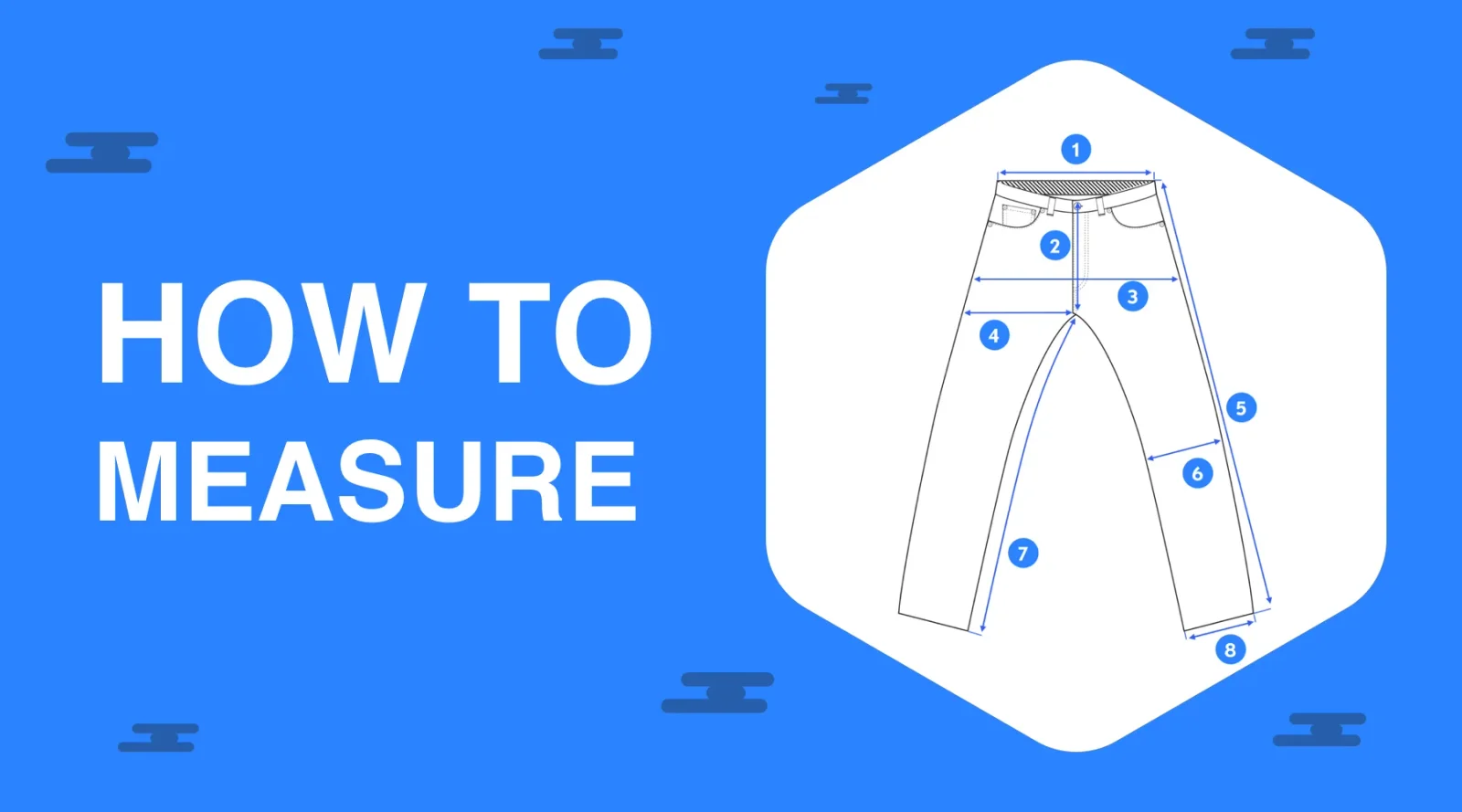
Every point, drawn on the garment so there is no guessing where the tape goes.
Quick answer
Lay the jeans flat and buttoned, then measure eight points in fit-impact order: waist, inseam, hip, rise, length, thigh, knee and hem. Take rise as the front rise, the number most listings skip. Hover or tap each step on the diagram to see where the tape sits. Sizely turns those numbers into a size chart buyers trust.
Anyone buying jeans secondhand checks the waist first, then the inseam, because those two decide whether the pair even goes on. Rise comes right after, since it separates a high-rise from a mid. Most guides stop at waist and inseam and leave the other six points to guesswork. This page draws all eight on the actual jeans, so you label the exact numbers a buyer will measure against their best-fitting pair.

- A
Waist
The number a buyer reads first. Button and zip the jeans, then run the tape straight across the very top of the waistband from edge to edge. Tap this step to see the exact line, because measuring an inch lower reads smaller than the size on the tag.Double it for the full waist circumference.
- B
Inseam
The leg-length number, taken along the inside seam from the crotch seam down to the bottom hem. Tap the step to follow the seam and not the leg twist. This is what tells a buyer the jeans will hit at the ankle and not pool on the floor.Recorded as-is. Do not double.
- C
Hip
Across the widest part of the seat, usually a few inches below the waistband. Lay the jeans flat and smooth out the back pockets first. Hover the step to see where the line sits, since this is the seat-room number that decides comfort when sitting.Double it for the full hip circumference.
- D
Rise
The front rise, measured straight up the front from the crotch seam to the top of the waistband. Tap the step to see the line. This single number is what separates a high-rise from a low-rise, and it is the spec generic listings almost always leave out.Recorded as-is. Do not double.
- E
Length
The full outside length, run down the outer seam from the top of the waistband to the hem. It pairs with the inseam to show how high the waist sits on the leg.Recorded as-is. Do not double.
- F
Thigh
Across the leg at its widest, taken straight under the crotch seam. This is the difference between a skinny and a relaxed cut, so tap the step to set the line in the right spot.Double it for the full thigh circumference.
- G
Knee
Across the leg at the knee point, roughly halfway down the inseam. On a tapered jean the knee pulls in sharply; on a straight leg it barely changes from the thigh.Double it for the full knee circumference.
- H
Hem
Across the leg opening at the very bottom. A narrow hem reads skinny or tapered, a wide one reads bootcut or wide-leg, so buyers use it to picture the silhouette.Double it for the full leg-opening circumference.
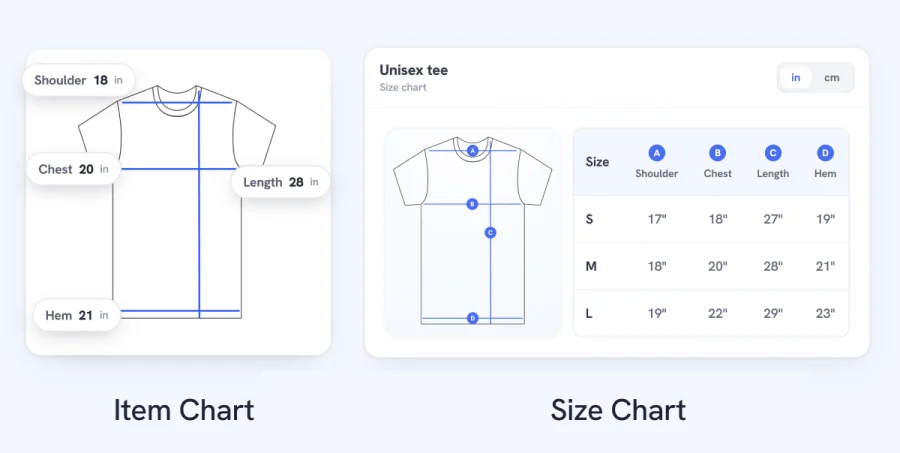
Put exact measurements on every listing, whether you sell on eBay, Shopify, or your own store.
Create your free size chart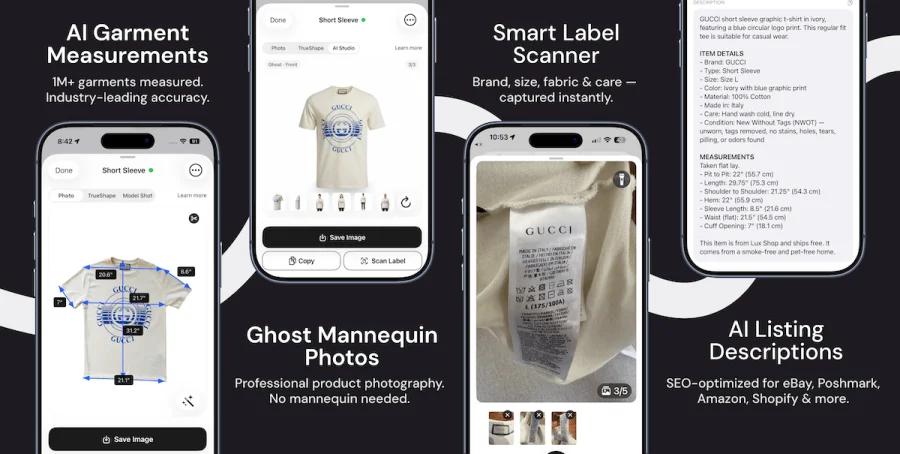
Every garment measured in 0.92 seconds, with pro photos, labels, and descriptions, from your iPhone.

Measure flat and never stretched, especially with denim that has spandex in it. Button and zip the jeans, smooth out the waistband, and keep the tape flat without pulling. Waist, hip, thigh, knee and hem are taken across one flat layer, so double each for the body circumference. Inseam, rise and length are single straight runs and get recorded exactly as measured, with no doubling.
Jeans size reference
| Size | Waist | Inseam | Hip | Rise | Thigh |
|---|---|---|---|---|---|
| 28 | 14.5 | 32 | 19 | 10 | 11 |
| 30 | 15.5 | 32 | 20 | 10.25 | 11.5 |
| 32 | 16.5 | 32 | 21 | 10.5 | 12 |
| 34 | 17.5 | 32 | 22 | 10.75 | 12.5 |
| 36 | 18.5 | 32 | 23 | 11 | 13 |
Frequently asked
What size am I in jeans from the flat measurements?
Double the flat waist to get the body waist in inches, which is usually close to the number printed on the tag. A 16 inch flat waist doubles to about 32, so it lists as a size 32. Brands cut differently, so the safest move is to compare the flat waist, inseam and rise against a pair you already own that fits. For the full conversion across US, UK and EU sizing, see our women's jeans size chart.
How do I measure jeans to sell online?
Lay them flat and buttoned on a table, then record all eight points: waist, inseam, hip, rise, length, thigh, knee and hem. Double the across numbers (waist, hip, thigh, knee, hem) for the body circumference and leave the inseam, rise and length as single runs. Listing the flat numbers gives you proof when a buyer says it did not fit, because they can lay their own jeans down and check the same tape line.
Where exactly do I measure the waist on jeans?
Button and zip the jeans first, then measure straight across the very top of the waistband from one edge to the other. Measuring an inch lower catches the curve of the hip and reads smaller, which is why two listings of the same jeans can disagree. Hover or tap the waist step on the diagram to see the exact line.
What is the difference between rise and inseam?
Rise is the vertical front measurement from the crotch seam up to the top of the waistband, and it sets how high the jeans sit, high, mid or low. Inseam is the inside-leg run from the crotch seam down to the hem, and it sets the length. They are both single straight runs, so neither one gets doubled.
Should I measure jeans in inches or centimeters?
Either is fine as long as you stay consistent and label the unit on the listing. Denim sizing is often quoted in inches in the US and UK and in centimeters across much of Europe, so showing both helps every buyer. Sizely lists both units on every chart so no one has to convert in their head.
Do stretch jeans change how I should measure?
Yes, measure stretch denim flat and relaxed, never pulled tight, because a number taken while stretching the fabric will read too large and disappoint the buyer. Note the stretch in your listing if the denim has elastane, since that pair will feel roomier on the body than a rigid pair with the same flat measurements.
Related size charts & tools
 Women's jeans size chart
 Pants sizes for men and women
 Women's international size chart
Sources: Sizely garment engine, spec #102 (Jeans Male), eight named measurement points. ASTM D6240 men's bottomweight body-measurement tables (representative ranges only). Last verified June 2026.
Make the right size obvious.
Join 85,000+ sellers showing measurements buyers trust. Free to start, no card needed.