How to measure baby clothes
Every point, drawn on the garment so there is no guessing where the tape goes.
Quick answer
Lay the garment flat and measure seven points: chest, length, shoulder, sleeve (upper, lower and cuff) and hem, in that fit order. Chest leads, taken straight across one inch below the armhole. Hover or tap each step on the diagram to see where the tape sits. Sizely turns those numbers into a baby size chart parents trust.
Parents shop baby clothes by age first, 0-3 months, 3-6 months, and then sanity-check chest and length against something that already fits. Length is the quiet decider here, since it tracks roughly with age and tells a parent whether a sleeper will still close next month. Most listings show a chest and a vague age. This page draws all seven points on the garment, so the age label has real numbers behind it.

- A
Chest
The first thing a parent checks against a shirt that fits, so it leads. Lay the garment flat and take the chest straight across, one inch below where the sleeve meets the body. Tap this step to see the exact line.Double it for the full chest circumference.
- B
Length
A single run from the shoulder seam down to the hem. On baby clothes this is the measurement that lines up loosely with age, so it tells a parent how long a piece will keep fitting as the baby grows.Recorded as-is. Do not double.
- C
Shoulder
Across the back from shoulder seam to shoulder seam. It is small on baby wear, but it sets how the neckline sits and whether the garment slips on over the head easily.Recorded as-is. Do not double.
- D
Sleeve A
The upper sleeve run, from the shoulder toward the elbow. Splitting the sleeve in two keeps a chubby little arm from being hidden inside one rounded total.Recorded as-is. Do not double.
- E
Sleeve B
The lower sleeve run, picking up where the upper sleeve ends and finishing at the cuff. Short on a bodysuit tee, longer on a winter sleeper.Recorded as-is. Do not double.
- F
Cuff
Across the end of the sleeve, the opening the hand passes through. On fold-over baby cuffs this also tells a parent whether the sleeve can be turned back to cover the fingers.Double it for the cuff circumference.
- G
Hem
Across the bottom opening of the garment. A roomy hem makes diaper changes and dressing easier, so it is worth listing even though many guides drop it.Double it for the full hem circumference.
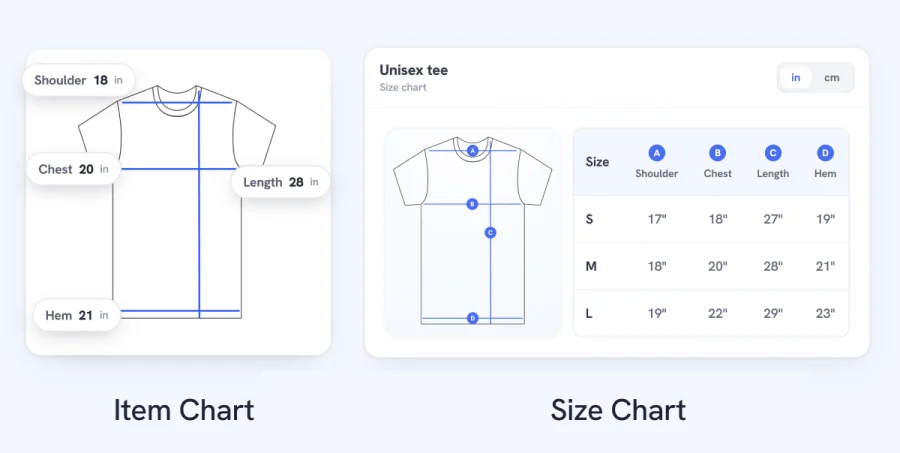
Put exact measurements on every listing, whether you sell on eBay, Shopify, or your own store.
Create your free size chart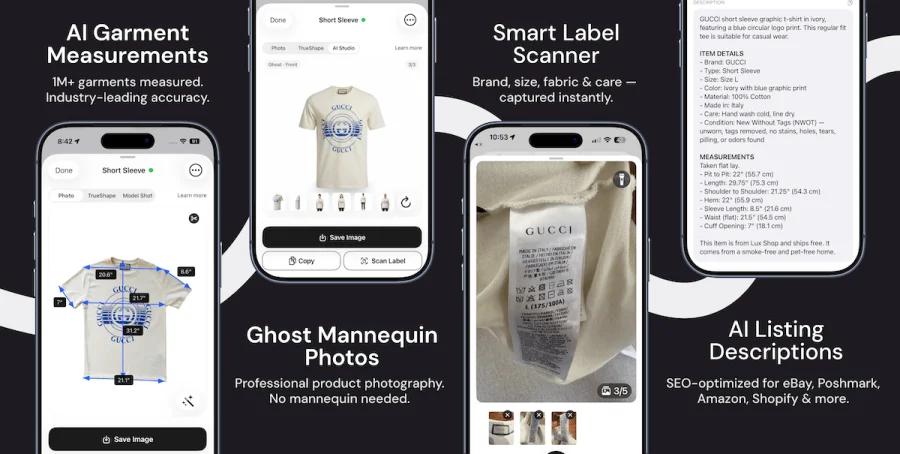
Every garment measured in 0.92 seconds, with pro photos, labels, and descriptions, from your iPhone.

Measure flat and never stretched, which matters double on baby knits and ribbed cuffs that pull long if you tug them. Treat length as a loose age guide, not a promise, since babies grow at their own pace. Of these seven, chest, cuff and hem are across measurements that double to a body circumference; length, shoulder and the two sleeve runs are single passes you record exactly as measured.
Baby clothes size reference
| Size | Chest | Length | Shoulder | Sleeve | Cuff |
|---|---|---|---|---|---|
| Newborn | 8 | 9.5 | 4 | 4.5 | 2 |
| 0-3M | 9 | 10.5 | 4.5 | 5.5 | 2.2 |
| 3-6M | 9.5 | 11.5 | 5 | 6.5 | 2.4 |
| 6-12M | 10.5 | 12.5 | 5.5 | 7.5 | 2.6 |
| 12-18M | 11 | 13.5 | 6 | 8.5 | 2.8 |
Frequently asked
How do baby clothes sizes work by age?
Baby sizes are labelled by age band, newborn, 0-3 months, 3-6 months, 6-12 months and so on, but the age is only a starting point. The real fit comes from chest and length, since a long, heavy baby may need the next band early. Treat the age on the label as a loose guide and let the measured chest and length settle the call.
Why does the chest measurement double but the length does not?
Chest is an across measurement, the tape crosses one flat layer of the garment, so the body circumference is roughly double that flat number. Length is a single run down the garment, the same line a tape on the baby would follow, so the flat number is already the real number. Cuff and hem double like the chest; shoulder and the sleeve runs do not.
What size baby clothes should I buy as a gift?
Size up rather than down. A newborn outfit is outgrown in weeks, while a 3-6 month piece on a smaller baby can be rolled at the cuff and grown into. Buy by the chest and length of clothes that fit now if you can, and check the seller's measured chart instead of trusting the age label alone.
Should I list baby clothes in inches or centimeters?
List both. Inches and centimeters split cleanly across markets, and parents are often comparing a tiny garment in a hurry. Stay consistent and label each unit. Sizely shows both on every chart, so a buyer never has to convert in their head while juggling a baby.
How do baby sizes compare to toddler and kids' sizes?
Baby sizes run by month up to about 24 months, then most brands switch to toddler and kids' sizes labelled by year or a number. The jump is not always smooth between brands. For the full conversion across regions, see our children's international size chart, and for older children the youth size chart picks up where baby sizing ends.
Related size charts & tools
 Children's international size chart
 Youth size chart
Sources: Sizely garment engine, spec #92 (Baby Shirt), seven named measurement points. EN 13402 body-dimension labelling for children's clothing (representative ranges only). Last verified June 2026.
Make the right size obvious.
Join 85,000+ sellers showing measurements buyers trust. Free to start, no card needed.