How to measure a jacket
Every point, drawn on the garment so there is no guessing where the tape goes.
Quick answer
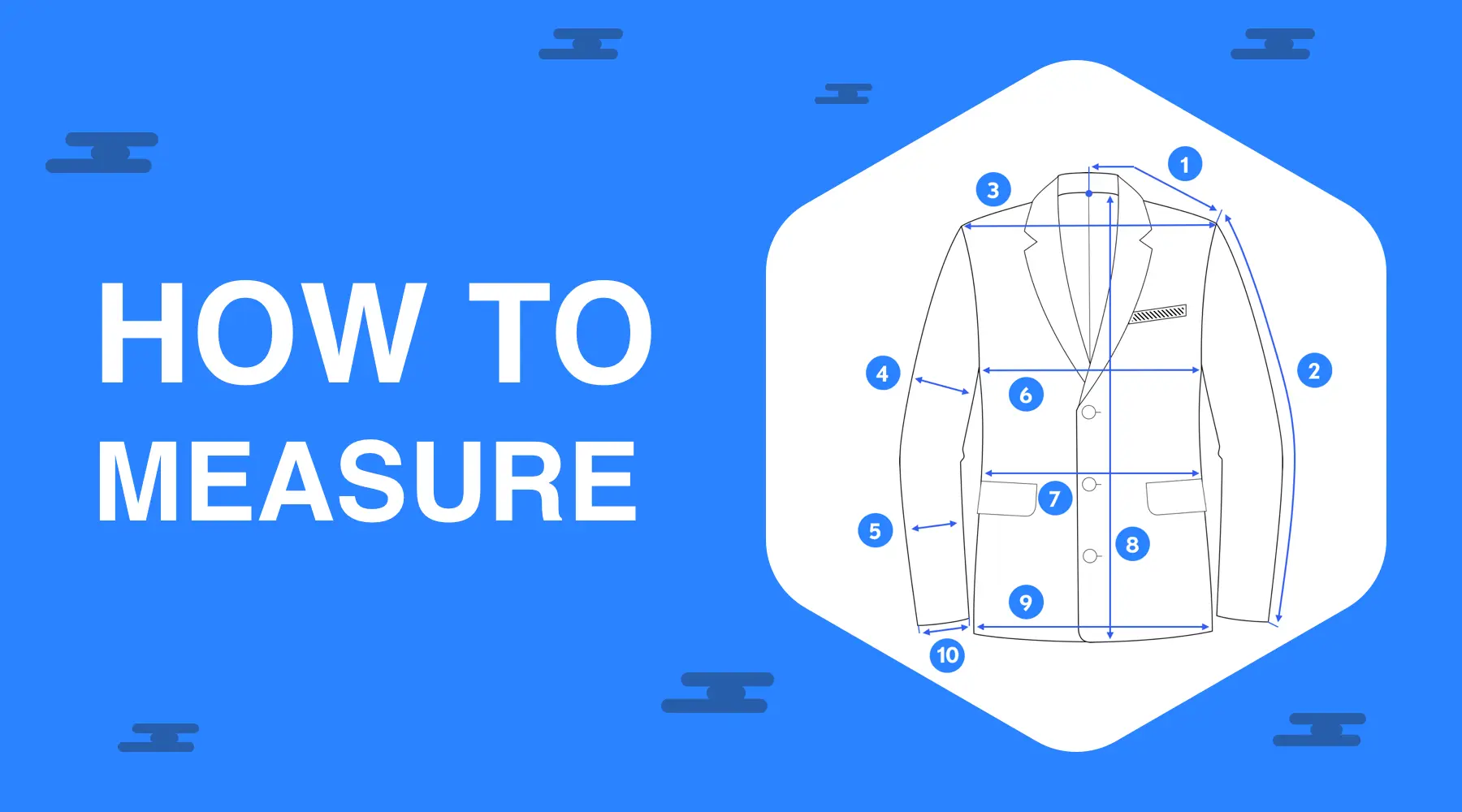
Lay the jacket flat and measure ten points in fit order: chest, length, shoulder, sleeve A, sleeve B, cuff, waist, hem, arm and forearm. Chest leads, taken one inch below a closed armhole with layering room left in. Hover or tap each step on the diagram for the exact line. Sizely turns those numbers into a chart buyers trust.
Someone deciding whether your jacket will fit checks chest first, then length and shoulder, because that trio decides whether it closes and sits right over a sweater. Most how-to pages stop at three or four points and leave the buyer guessing on sleeve and cuff. This guide draws all ten on the real garment, so what you list is what they will check.

- A
Chest
The number a buyer reads first, so it leads. Close the front, lay the jacket flat, and take the chest straight across one inch below where the sleeve meets the body. Tap this step on the diagram for the exact line. With layering in mind, a touch of room here is normal, not a mistake.Double it for the full chest circumference.
- B
Length
One vertical run from the highest point of the shoulder down to the hem. Tap the step to see where the line starts and stops so you follow the seam, not the lining. Length tells the buyer whether it sits at the hip or drops past it.Recorded as-is. Do not double.
- C
Shoulder
Straight across the back from one shoulder seam to the other. This sets how wide the jacket sits before the sleeves begin and is the hardest point to fake on a buyer.Recorded as-is. Do not double.
- D
Sleeve A
The upper sleeve run, from the shoulder seam toward the elbow. Splitting the sleeve in two keeps a long outer sleeve from hiding inside one rounded figure.Recorded as-is. Do not double.
- E
Sleeve B
The lower sleeve run, picking up where the upper section ends and continuing to the cuff. Together the two runs give the full sleeve a buyer can trust.Recorded as-is. Do not double.
- F
Cuff
Across the opening at the very end of the sleeve. On a jacket this gates whether a layered sleeve passes through, so generic guides that drop it leave a real fit question open.Double it for the full cuff circumference.
- G
Waist
Across the body at its narrowest midsection point. A structured jacket pulls in here while a boxy one reads close to the chest, and the gap between the two tells the buyer the shape.Double it for the full waist circumference.
- H
Hem
Across the bottom opening, hem edge to hem edge. A wide hem reads roomy over layers; a narrow one tapers toward the body.Double it for the full hem circumference.
- I
Arm
Across the widest part of the upper sleeve, the bicep line. This is the point that decides whether the jacket clears a bulky layer underneath.Double it for the full bicep circumference.
- J
Forearm
Across the lower sleeve, partway down toward the cuff. Pair it with the cuff number to show how the sleeve narrows from arm to wrist.Double it for the full forearm circumference.
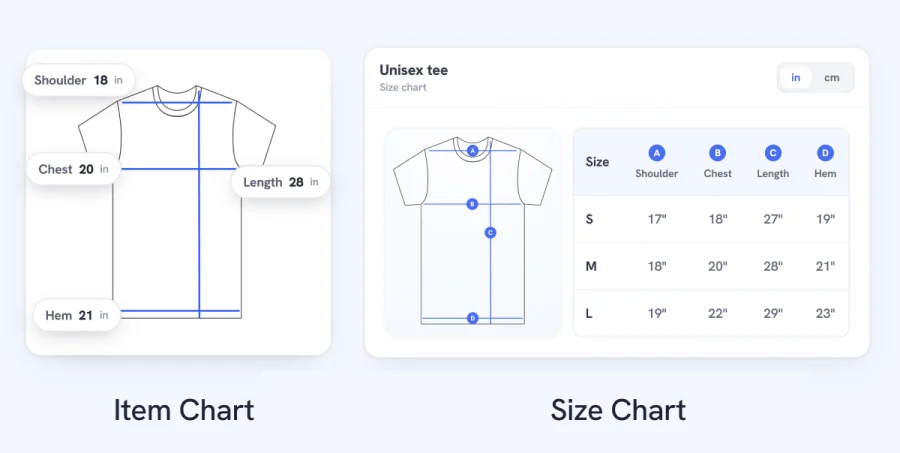
Put exact measurements on every listing, whether you sell on eBay, Shopify, or your own store.
Create your free size chart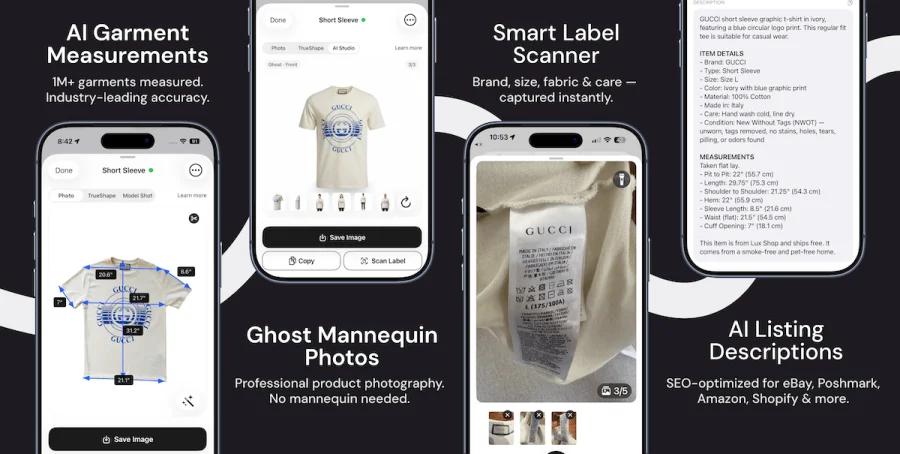
Every garment measured in 0.92 seconds, with pro photos, labels, and descriptions, from your iPhone.

Measure flat and never stretched, with the jacket zipped or buttoned and smoothed so the panels lie even. Outerwear is meant to layer, so a closed, flat number is the honest one a buyer can match against a coat they already own. Chest, waist, hem and cuff run across one layer and double to a full circumference; length, shoulder, both sleeve runs, arm and forearm are single passes you record exactly as measured.
Jacket size reference
| Size | Chest | Length | Shoulder | Sleeve | Waist |
|---|---|---|---|---|---|
| S | 20 | 26 | 17.5 | 24.5 | 19 |
| M | 22 | 27 | 18.5 | 25 | 21 |
| L | 24 | 28 | 19.5 | 25.5 | 23 |
| XL | 26 | 29 | 20.5 | 26 | 25 |
| 2XL | 28 | 30 | 21.5 | 26.5 | 27 |
Frequently asked
How do I measure a jacket chest for layering?
Close the front, lay it flat, and measure straight across one inch below the armhole seams. Read the number as it sits, then leave the listing as-is; a jacket already carries layering room in its cut, so you do not add inches yourself. If you want to show buyers the body size it suits, double the flat chest for the circumference and note that it wears over a shirt or light sweater.
Which jacket measurements should I double and which stay as measured?
Double the across points, chest, waist, hem and cuff, because each is taken over a single flat layer and the body number is roughly twice the flat. Length, shoulder, both sleeve runs, arm and forearm are single passes down or across the garment, so the flat figure is already the real number. Listing both the flat number and the doubled circumference saves a buyer the guesswork.
What size jacket am I based on the measurements?
Take your own chest circumference over the layer you plan to wear, then halve it and compare to the flat chest on the chart, picking the size at or just above that. Shoulder width is the tiebreaker, since a jacket that is wide enough in the chest but tight across the shoulders will pull. For a quick cross-check against numbered sizing, see our men's international size chart.
Should I measure a jacket in inches or centimeters?
Either is fine as long as you stay consistent and label the unit on every row. Sellers who ship across borders do best listing both, since a buyer in one market reads inches and another reads centimeters. Sizely shows both units on every chart so nobody has to convert in their head before buying.
Why does my jacket measure bigger than my usual shirt size?
Outerwear is drafted to sit over other clothing, so the same labeled size runs wider through the chest and arm than a shirt. That extra room is intended ease, not a sizing error. Measuring the garment flat and listing the real numbers lets a buyer see exactly how much room is there instead of trusting the tag.
Related size charts & tools
 Men's international size chart
 Women's international size chart
Sources: Sizely garment engine, spec #82 (Bomber), ten named measurement points. ISO 8559-1 garment body-measurement definitions (representative ranges only). Last verified June 2026.
Make the right size obvious.
Join 85,000+ sellers showing measurements buyers trust. Free to start, no card needed.