How to measure a blazer
Every point, drawn on the garment so there is no guessing where the tape goes.
Quick answer
Lay the blazer flat and record ten points in fit order: chest, length, shoulder, sleeve A, sleeve B, cuff, waist, hem, arm and forearm. Shoulder is the make-or-break point on a tailored jacket, so chest and shoulder lead together. Hover or tap each step on the diagram for the exact line. Sizely builds those numbers into a chart buyers trust.
On a blazer the shoulder seam has to land on the wearer's shoulder, so a buyer reads chest and shoulder before anything else. Skip those and the rest of the fit cannot be tailored back into place. Most guides cover three or four points; this one maps all ten on the garment, so your listing answers the questions a tailored buyer actually asks.

- A
Chest
Button the front, lay it flat, and run the tape across one inch beneath where the sleeve joins the body. Tap this step on the diagram to confirm the line. Chest sets the room through the torso and pairs with shoulder to define the whole fit.Double it for the full chest circumference.
- B
Length
A single run from the top of the shoulder seam down to the bottom hem. Tap the step to see start and end points so you trace the back panel, not the vent. Length separates a cropped cut from a longer, more formal line.Recorded as-is. Do not double.
- C
Shoulder
Seam to seam across the upper back. On a blazer this is the one number a tailor cannot easily alter, which is why it shares top billing with chest.Recorded as-is. Do not double.
- D
Sleeve A
The upper sleeve, measured from the shoulder seam down toward the elbow. Recording the sleeve in two parts keeps the working-cuff detail honest instead of rounding it away.Recorded as-is. Do not double.
- E
Sleeve B
The lower sleeve, continuing from the elbow point to the cuff edge. Add it to the upper run for the full sleeve length a buyer can match against a jacket they own.Recorded as-is. Do not double.
- F
Cuff
Across the finished sleeve opening at the wrist. A trim cuff is part of a tailored look, so listing it tells a buyer whether the sleeve sits close or loose at the hand.Double it for the full cuff circumference.
- G
Waist
Across the body at the narrowest point of the side seam. The chest-to-waist drop is what gives a blazer its shape, so this number signals a fitted cut versus a relaxed one.Double it for the full waist circumference.
- H
Hem
Across the bottom opening at the front edges. On a structured jacket the hem usually reads close to the waist, and a wider hem points to a boxier block.Double it for the full hem circumference.
- I
Arm
Across the widest part of the upper sleeve at the bicep. This decides whether the sleeve clears the arm without straining the seam under a shirt.Double it for the full bicep circumference.
- J
Forearm
Across the lower sleeve nearer the cuff. Read alongside the cuff number, it shows how cleanly the sleeve tapers toward the wrist.Double it for the full forearm circumference.
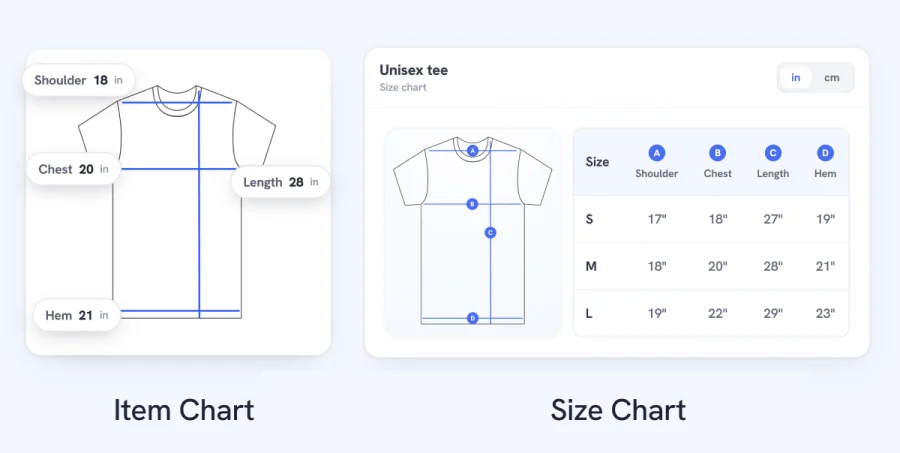
Put exact measurements on every listing, whether you sell on eBay, Shopify, or your own store.
Create your free size chart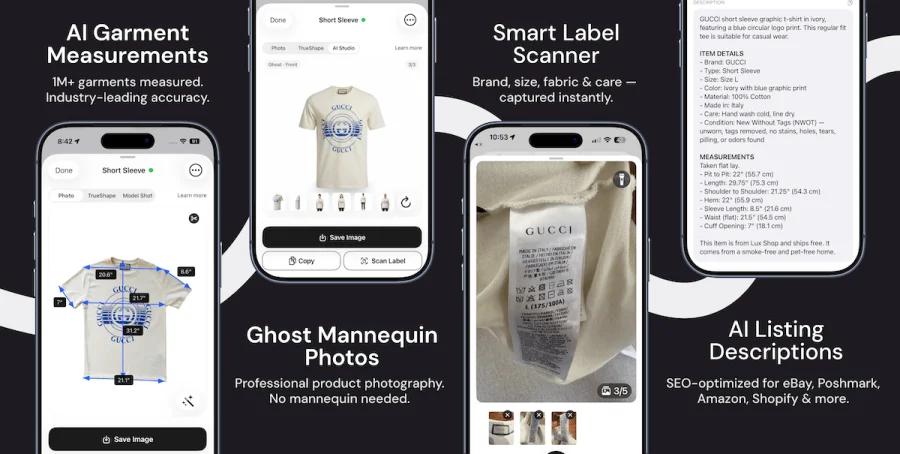
Every garment measured in 0.92 seconds, with pro photos, labels, and descriptions, from your iPhone.

Measure flat and never stretched, buttons done up and the lapels pressed open so the front lies even. A structured jacket holds its shape, so smooth out wrinkles rather than tugging the cloth. Chest, waist, hem and cuff cross a single layer and double to a circumference; length, shoulder, both sleeve runs, arm and forearm are single passes recorded exactly as they read.
Blazer size reference
| Size | Chest | Length | Shoulder | Sleeve | Waist |
|---|---|---|---|---|---|
| 36R | 20 | 29.5 | 17.5 | 24.5 | 18 |
| 38R | 21 | 30 | 18 | 25 | 19 |
| 40R | 22 | 30.5 | 18.5 | 25.5 | 20 |
| 42R | 23 | 31 | 19 | 26 | 21.5 |
| 44R | 24 | 31.5 | 19.5 | 26.5 | 23 |
Frequently asked
How do I know if a blazer shoulder will fit?
Lay the blazer flat and measure seam to seam across the back, then compare that flat shoulder to your own shoulder width measured point to point. If the garment number runs more than half an inch under yours, the seam will sit inside your shoulder and pull; a touch over is usually comfortable. Shoulder is the one measurement a tailor cannot fix cheaply, so match it first.
What does the R in a blazer size like 40R mean?
The number is the chest size in inches and the letter is the length, with S for short, R for regular and L for long. A 40R fits a 40 inch chest at a regular back length, while 40L adds length for a taller frame. Because brands cut these differently, the flat measurements on your chart are more reliable than the label alone.
Which blazer measurements double and which stay flat?
Chest, waist, hem and cuff are across measurements taken over one layer, so you double each to get the body circumference. Length, shoulder, both sleeve runs, arm and forearm are single passes, meaning the flat number is already the real number. Showing both the flat and the doubled figure lets buyers convert without doing the math themselves.
Should I list blazer measurements in inches or centimeters?
Use whichever your buyers expect, but label the unit clearly and keep it consistent across every row. Sellers reaching more than one country gain by listing inches and centimeters side by side. Sizely puts both units on the chart automatically, so an international buyer never has to convert before deciding.
Why is my blazer chest looser than a shirt of the same size?
A blazer is built to wear over a shirt, so the same labeled size carries extra ease through the chest. That room is part of the design rather than a fault. Measuring the jacket flat and posting the real chest number lets a buyer see the true allowance instead of guessing from the size on the label.
Related size charts & tools
 Men's international size chart
 Women's international size chart
Sources: Sizely garment engine, spec #83 (Blazer Jacket Male), ten named measurement points. ISO 8559-1 garment body-measurement definitions (representative ranges only). Last verified June 2026.
Make the right size obvious.
Join 85,000+ sellers showing measurements buyers trust. Free to start, no card needed.